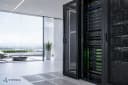
Could Your Home Become an AI Data Center? Exploring NVIDIA's Distributed AI Infrastructure Strategy
Could the next AI data center be closer than we think, maybe even in a home? As AI demand grows, data center construction costs rise, and power constraints tighten, the industry is starting to explore new distributed AI infrastructure models that spread computing across smaller locations. NVIDIA’s ecosystem has helped accelerate this shift by making high-performance AI computing more flexible, efficient, and scalable. For businesses trying to understand what comes next, this is where trusted infrastructure partners matter. Viperatech helps organizations navigate modern AI infrastructure decisions with practical server and GPU solutions built for real-world deployment.
What Is a Home AI Data Center?
A home AI data center is a residential environment that hosts AI servers or compute hardware and connects them to a larger network. In practice, this could mean a compact rack of GPUs, remote monitoring tools, secure networking, and cooling designed for continuous operation.
It is different from a personal AI workstation. A workstation supports one user or a small team, while a residential data center concept is built to contribute to broader distributed computing network operations.
How Distributed AI Infrastructure Works
Distributed AI infrastructure uses many smaller computing nodes instead of relying only on one massive facility. These nodes share compute resources, storage, and workloads across a network.
This model aligns closely with edge computing principles, where processing happens closer to the user or data source. It can improve responsiveness, reduce bottlenecks, and make infrastructure easier to scale in smaller steps.
Can a home become a data center?
Yes, technically a home can become a small data center if it has the right hardware, power supply, cooling, networking, and management systems. The real challenge is not whether it can be done, but whether it can be done safely, reliably, and economically at scale.
Why Traditional AI Data Centers Are Facing Challenges
Rising Demand for AI Compute
Generative AI, enterprise automation, and larger model training workloads are driving massive GPU demand. Companies want more compute than ever, and they want it quickly.
That pressure is changing the future of AI infrastructure, because traditional builds often cannot expand at the same speed as AI adoption.
Power and Infrastructure Constraints
New data center projects face real limits:
These bottlenecks make it hard to add capacity fast enough, especially in regions where land and power are already constrained.
Community Challenges Around Large Data Centers
Large facilities can also face public resistance. Common concerns include:
These challenges are part of why companies are looking beyond the traditional model and thinking differently about AI data center strategy.
NVIDIA's Distributed AI Infrastructure Vision
The Shift Toward Decentralized Computing
Distributed models are being explored because they may allow faster infrastructure expansion and better use of existing resources. Instead of waiting for one large build, organizations can spread workloads across multiple locations.
That does not remove the need for major data centers, but it does create a more flexible model for future growth.
The Role of Residential Compute Nodes
Residential compute nodes could, in theory, provide local computing capacity where power and connectivity are available. These nodes would likely be managed remotely, with workloads assigned according to demand.
This is still an emerging concept, but it fits into a broader conversation about distributed computing network design and future AI networks.
Distributed Infrastructure vs Traditional Data Centers
Traditional Data Centers | Distributed Residential Nodes |
Centralized locations | Distributed across many homes or smaller sites |
Slower deployment | Faster modular deployment |
High upfront investment | Smaller incremental investment |
Large-scale scalability | Flexible node-by-node scaling |
Concentrated operational risk | Risk spread across locations |
Potential Benefits of Home-Based AI Infrastructure
Faster AI Capacity Expansion
Distributed infrastructure can grow in smaller steps. That means organizations could add compute more quickly without waiting for a full facility build.
Better Geographic Distribution
A wider spread of nodes can reduce congestion and improve resilience. It also supports geographic redundancy, which can be useful for latency-sensitive AI workloads.
New Opportunities for Businesses and Individuals
If distributed AI infrastructure matures, it could create new participation models for businesses and even homeowners. That might include compute leasing, hosting agreements, or other infrastructure participation opportunities.
What are the advantages of distributed AI infrastructure?
Faster deployment.
Better geographic coverage.
Improved scalability.
Efficient resource utilization.
Reduced dependency on single locations.
Challenges and Risks That Cannot Be Ignored
Physical Security Concerns
Residential locations are not naturally designed to protect expensive AI hardware. Theft, tampering, and unauthorized access are real concerns.
Fire Safety and Hardware Reliability
High-performance AI systems generate heat and need constant cooling. Without proper design, hardware failure and fire risk can increase.
Cybersecurity and Data Protection
Remote management creates security challenges. Any distributed setup must protect:
Remote access.
Network traffic.
Sensitive data.
Insurance and Regulatory Questions
There are still open questions around liability, insurance coverage, and future regulation. These issues matter just as much as the hardware itself.
Is it safe to install AI infrastructure at home?
It can be safe if the system is professionally designed with strong cooling, fire protection, secure access, and cybersecurity controls. But most homes are not built for enterprise-grade AI loads, so safety depends on careful planning and ongoing monitoring.
Could Distributed AI Replace Traditional Data Centers?
Why Large Data Centers Still Matter
Large data centers remain essential for training frontier AI models, running hyperscale cloud services, and supporting enterprise workloads that need dense, centralized compute.
A Hybrid Future Is More Likely
The most realistic path is a hybrid one. Traditional facilities will continue to support major workloads, while distributed systems and edge computing handle specialized, local, or burst-scale tasks.
Why Businesses Need Experienced AI Infrastructure Partners Like Viperatech
As AI infrastructure becomes more complex, businesses need more than hardware. They need guidance on architecture, scaling, deployment, and operational fit.
That is where Viperatech adds value:
AI server and GPU infrastructure expertise.
Support for deployment planning and scaling.
Enterprise-grade hardware solutions.
Guidance on selecting the right architecture for the workload.
Practical support for organizations moving into AI adoption.
This is not just about buying servers. It is about choosing infrastructure that can grow with business needs.
What This Means for the Future of AI Infrastructure
AI demand is reshaping everything from power planning to deployment strategy. Distributed models may not replace traditional data centers, but they will likely become an important part of the infrastructure mix.
For businesses, the key is to stay flexible and choose partners who understand both current demands and emerging models. Viperatech helps make that transition clearer by supporting practical, scalable AI infrastructure decisions as the market evolves.
Frequently Asked Questions
Can homes become AI data centers?
Yes, homes can technically host AI infrastructure if they have the right power, cooling, networking, and security. In reality, most residential deployments would need to be part of a managed distributed system rather than stand-alone facilities.
Why are companies exploring distributed AI infrastructure?
Companies are exploring distributed AI infrastructure to reduce deployment delays, improve scalability, and make better use of available power and location options. It offers a more flexible way to add compute capacity as AI demand grows.
What are the risks of residential data centers?
The biggest risks are physical security, cooling failures, fire safety concerns, cybersecurity exposure, and unclear insurance or regulatory treatment. Any residential setup would need enterprise-style safeguards to be viable.
Will distributed AI replace traditional data centers?
No, not fully. Distributed AI is more likely to complement traditional data centers. Large facilities will still be needed for training and hyperscale workloads, while distributed nodes handle edge and specialized tasks.
How does edge computing relate to home AI infrastructure?
Edge computing processes workloads closer to where they are used or generated. A home-based AI node could act as an edge device in a broader network, helping reduce latency and improve responsiveness.