How AI Hardware Evolved?
Imagine needing an entire room just to run a program.That was reality in the early days of computing.
Today, a single AI server hardware solution can handle workloads that would have been unimaginable back then, powering chatbots, recommendation engines, and real-time analytics.
This is the story of how we got from room-sized machines to the powerful AI servers that drive modern high-performance computing.
The Mainframe Era: Computers in Their Own Rooms

In the 1950s and 1960s, computers were rare, expensive, and massive.
Early mainframes were used for:
They used vacuum tubes at first: bulky components that failed often and ran hot. Then came transistors, which were smaller, more reliable, and energy efficient. Progress, but computers still weren't personal. You didn't own one. You rented time on one.
The key insight from this era: computing power had real value.
The PC Revolution: Power Moves to Desks
In the 1980s and 1990s, everything changed.
Microprocessors packed entire CPUs onto single chips, and personal computers moved from data centers into homes and offices. Suddenly, one person could write code, create graphics, and connect to early networks from their own desk.
Behind the scenes, another big idea shaped this era: Moore's Law: Transistor counts roughly doubled every two years, meaning more performance in the same space and often at a lower cost. But even with all this progress, these machines still weren't optimized for AI workloads. Training deep learning models was slow and impractical.
We needed a new kind of hardware.
The GPU Breakthrough: AI's Perfect Partner
The real turning point in AI hardware evolution came from gaming.
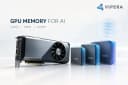
GPUs (Graphics Processing Units) were designed to render video graphics by calculating colors and positions for millions of pixels simultaneously. This required parallel processing: thousands of smaller cores working at the same time. Someone realized this was exactly what neural networks needed.
Here's the key difference,
CPU vs GPU:
A CPU is like one very fast worker doing tasks one by one.
A GPU is like a large team, each member doing a small part simultaneously.
AI models thrive on parallel operations. Once researchers started using enterprise GPU solution instead of CPUs, training times dropped dramatically. What took weeks on CPUs now took days or hours on GPUs.
This unlocked:
At the same time, ASICs (Application-Specific Integrated Circuits) chips built for one specific job like AI inference emerged. Instead of being general-purpose, these chips were hyper-optimized for a single task. GPUs and ASICs marked the beginning of truly specialized AI hardware.
Today's AI Servers: Purpose-Built for Intelligence

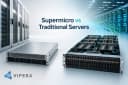
Now we're in the era of modern AI servers and high-performance computing (HPC). A modern AI server isn’t just a strong machine, it’s a highly tuned system designed for:
Training machine learning models
Running large language models
Processing massive amounts of data in real time
What's inside?
Multiple GPUs or AI superchip server accelerators working together
High-speed networking to move data quickly between chips
Fast storage to keep models and datasets accessible
Advanced cooling and power delivery
In data centers, hundreds or thousands of these servers link into clusters that power the tools people use daily: image recognition, voice assistants, personalization engines, and more. Not every business needs to build its own data center. Many rely on specialized partners in AI and HPC infrastructure to help them select the right hardware mix, design systems for efficiency, and provide hosting solutions that scale.
This is where companies like Viperatech operate, helping organizations turn raw compute hardware into practical, powerful AI systems for real-world use.
What Comes Next?
The story of AI hardware isn't finished.
As models grow bigger and AI moves into more parts of everyday life, hardware demands keep increasing. We're already seeing:
Custom AI chips designed by major tech companies
Edge AI, where models run directly on devices
Early research into neuromorphic and quantum approaches
But the pattern remains constant since the 1950s:
- New problems appear.
- Existing hardware struggles.
- The next generation is born.
From room-sized mainframes to desktop PCs, from gaming GPUs to specialized AI servers, we've constantly pushed the limits.
And as our hunger for intelligence and automation continues to grow, the story of AI hardware is still being written.