How We Verify and Test Every GPU Before Shipping
Buying a GPU online can feel risky. You might worry about hidden wear, random crashes, overheating, or performance that doesn’t match the listing. For AI work, mining, or any serious compute, a bad GPU isn’t just annoying, it can cost you real time and money.
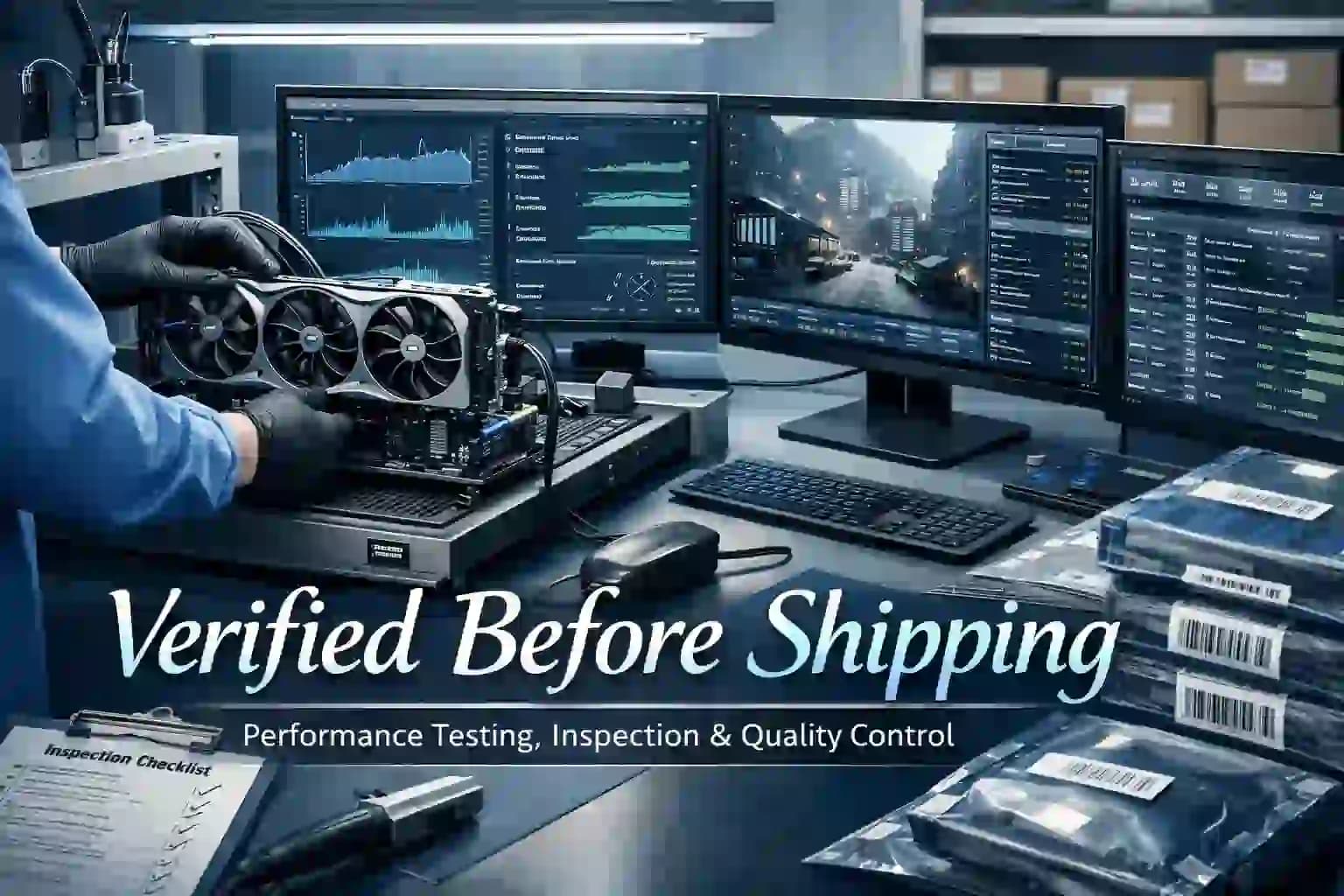
At Viperatech, we test each GPU before shipping using a consistent GPU testing process: physical inspection, safe power-on checks, stress testing, GPU benchmarking, and thermal/stability monitoring. We confirm the card runs reliably under load, stays within expected temperatures, and delivers consistent performance, then we complete a final GPU quality check before it’s packed.
At Viperatech, our goal is simple: deliver GPUs you can trust, backed by clear, repeatable testing and AI hardware quality assurance you can understand.
Why GPU Testing Matters
A strong GPU quality check isn’t “extra.” It’s the difference between confidence and chaos. Here’s why it matters:
Avoiding defective units: Some issues only show up under load—like sudden crashes, artifacting, or unstable memory. Testing helps catch these before they reach you.
Ensuring performance consistency: Two cards with the same model name can behave differently if one has hidden problems. GPU performance testing helps verify expected results.
Preventing customer downtime: If your GPU fails after install, you lose days to troubleshooting, returns, and re-deployment. Testing reduces that risk.
Protecting your full system: A faulty GPU can trigger power instability, driver errors, and failed workloads that look like “random” system problems.
Building trust in the supply chain: Working with a reliable GPU supplier means you shouldn’t have to “hope” your GPU is good, you should know it was checked.
Our Step-by-Step GPU Testing Process
Below is the exact, repeatable GPU testing process we use to verify function, stability, and performance before shipping.
Physical inspection (condition + connectors)
We start with a careful visual check to catch common physical issues early:
PCIe edge condition and alignment
Ports (HDMI/DP) for damage or looseness
Fan spin and fan noise (quick manual and powered check)
Heatsink condition and obvious signs of stress (bends, missing screws, corrosion)
This step is simple, but it prevents avoidable failures, especially shipping-related or handling-related issues.
Safe power-on testing (basic function check)
Next, we confirm the GPU powers on correctly in a controlled test bench:
The system detects the GPU properly
Drivers recognize the card normally
Basic display output works (when applicable)
No immediate error behavior (boot loops, black screen, device errors)
Think of this as the “does it wake up and behave normally?” stage of our GPU quality check.
Stress testing (stability under load)
A GPU can look fine at idle and still fail when pushed. That’s why we run controlled stress tests designed to simulate real workloads:
We apply sustained load to the GPU core and memory
We watch for crashes, freezes, driver resets, and visual artifacts
We confirm the card can hold stable performance over time
This is the heart of GPU performance testing, because real users don’t buy GPUs to sit idle.
GPU benchmarking (performance verification)
After stability, we verify performance. GPU benchmarking helps us answer a simple question: Does this card perform like it should?
We compare benchmark results to expected ranges for that model and configuration. We don’t chase “perfect” numbers, real systems vary, but we do look for red flags like unusually low performance, inconsistent scores, or sudden throttling.
Temperature and stability checks (thermals + throttling)
Heat is one of the biggest reasons GPUs fail or underperform. During testing, we monitor:
Peak temperature under load
Fan behavior and ramp-up
Signs of thermal throttling (performance dropping because it’s too hot)
Stability during long runs
If a card can’t maintain safe, stable thermals during our checks, it doesn’t pass our AI hardware quality assurance standards.
Final quality assurance (the “ship-ready” check)
Before packing, we do a final pass to confirm:
The GPU is clean and correctly labeled
Ports and connectors are re-checked
The card passed the recorded test steps
Packaging is protective and shipment-ready
This final step closes the loop on the full GPU testing process, from first inspection to final pack-out.
Tools and Benchmarks We Use
We use common, trusted testing ideas, not mystery “black box” checks. The exact tool mix can vary by GPU type and workload, but our approach is consistent:
Monitoring tools: These read temperatures, clock speeds, fan speeds, and power behavior. (Examples include utilities like HWiNFO or vendor tools.)
Driver-level checks: For AI-focused cards, we confirm the system can see and query the GPU properly (for example, tools like nvidia-smi for NVIDIA setups).
Stress tests: These push the GPU hard on purpose to reveal instability, similar to how heavy training, rendering, or mining loads behave.
GPU benchmarking suites: Benchmarks provide repeatable performance snapshots so we can confirm the card performs within normal expectations for its model.
We monitor, stress, measure, and verify, then we only ship what passes.
How This Benefits You
A strong testing standard isn’t just a “nice-to-have.” It directly improves your experience:
Reliable performance: Fewer surprises when you deploy to production, start training, or scale a rig.
Reduced risk: Lower chance of early failure, weird crashes, or unstable workloads.
Better ROI: Less time spent troubleshooting and returning parts means more time actually using your hardware.
Smoother setup: A properly tested GPU is easier to install and validate on your side.
Confidence at scale: If you’re ordering multiple units, consistency matters even more, and GPU performance testing helps maintain it.
Why Viperatech Is a Trusted GPU Supplier
There are many places to buy GPUs. The difference is what happens before the box shows up at your door.
At Viperatech, we focus on three things that matter to real buyers:
Every unit goes through a repeatable GPU quality check, not a quick glance.
We believe customers deserve to understand the process, not just hear “tested.”
Mission-driven reliability:
Whether you’re training models, building infrastructure, or running compute-heavy workloads, we aim to be the reliable GPU supplier you can come back to.
FAQ
Do all GPU suppliers test their products?
No. Some do basic checks, others do none, and some testing is inconsistent. Ask what their GPU testing process includes and whether it involves stress testing and benchmarking.
What problems can GPU performance testing catch?
Common issues include crashes under load, overheating, throttling, unstable memory behavior, and performance that’s far below expected norms.
Is GPU benchmarking the same as stress testing?
Not exactly. GPU benchmarking measures performance (a score or result). Stress testing focuses on stability over time. We use both because you need speed and reliability.
Why does temperature checking matter so much?
Because heat impacts performance and lifespan. Thermal instability can cause throttling, random shutdowns, or degraded performance, especially in long AI or mining runs.
Conclusion
A GPU is a major purchase, and you shouldn’t have to gamble on whether it works “the way it should.” Viperatech’s GPU testing process combines hands-on inspection, controlled power-on verification, stress testing, GPU benchmarking, and final AI hardware quality assurance checks, so your hardware arrives ready to perform.
If you’re sourcing GPUs for AI, mining, or high-performance workloads, reach out to Viperatech and tell us what you’re building. We’ll help you choose the right cards, and ship units that have been tested with real-world reliability in mind.